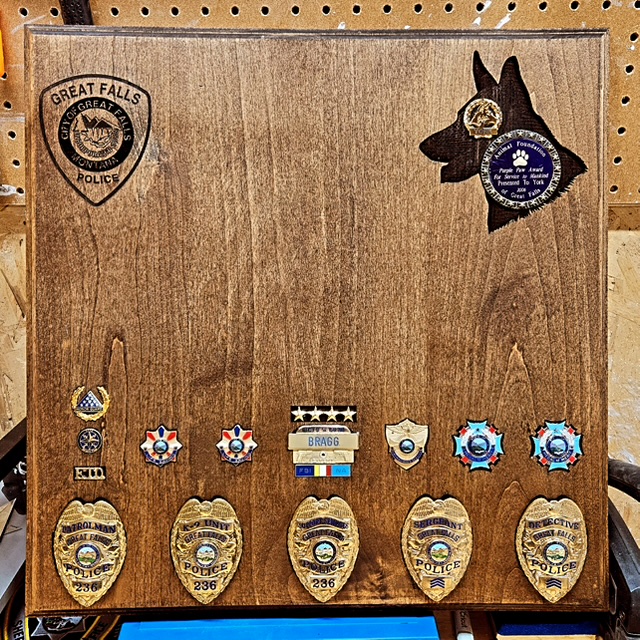
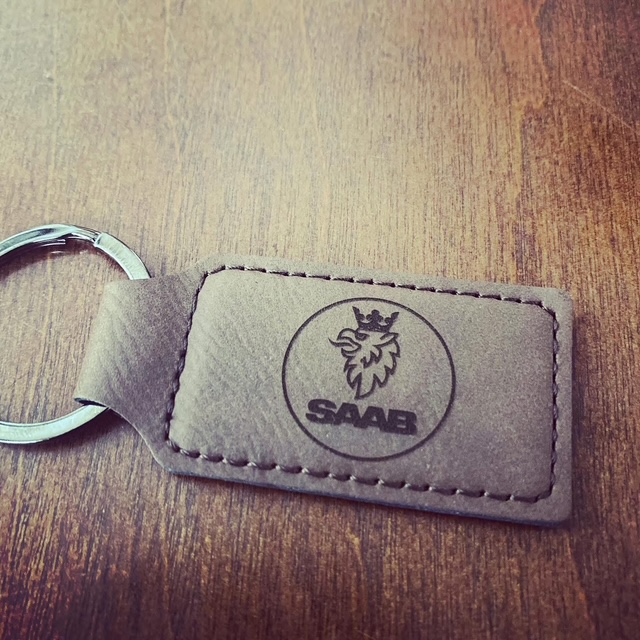
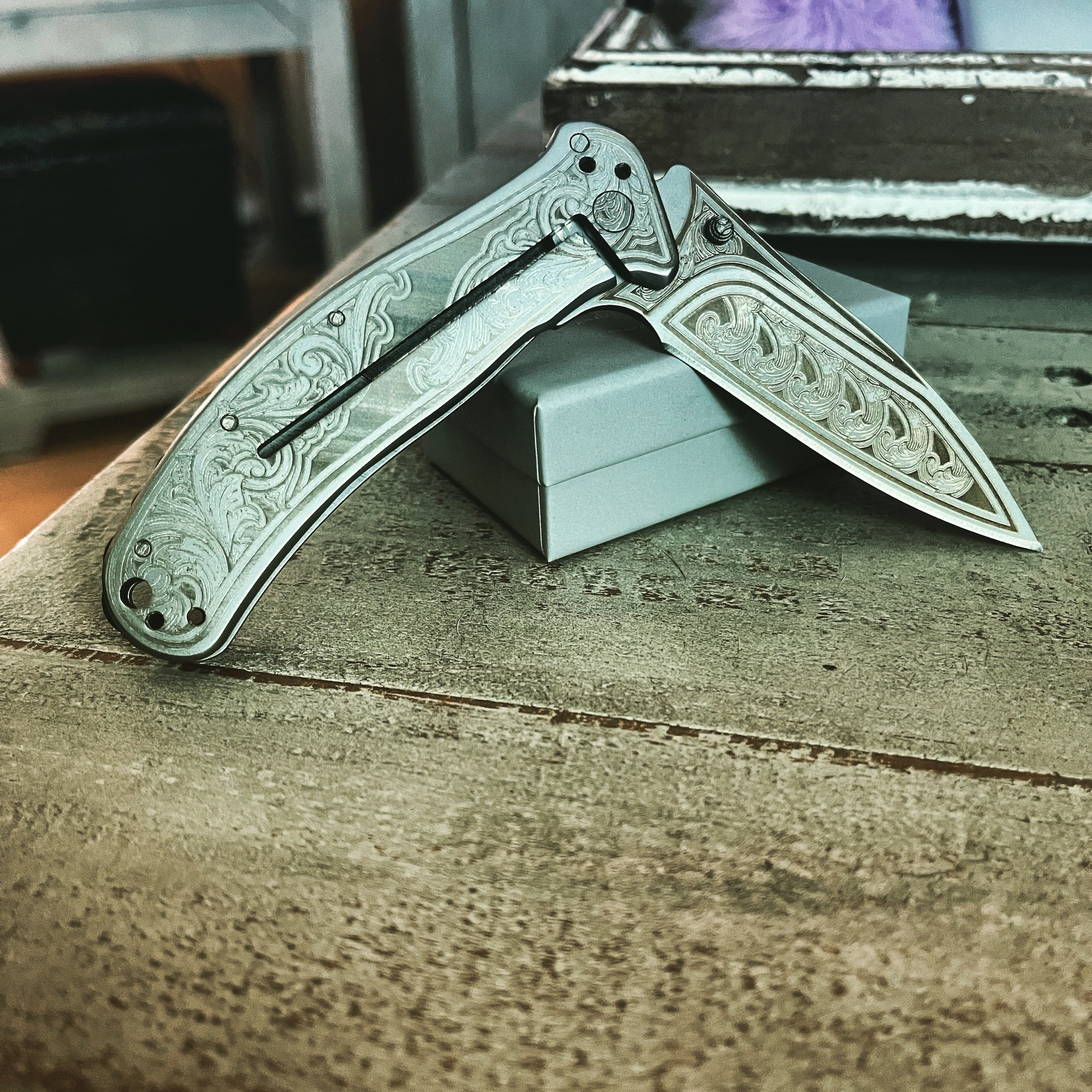
When you commission a custom engraved gift, you are not buying decoration. You are buying a keepsake meant to stay — something that outlasts the occasion it was made for. That makes the oldest question in the craft worth answering plainly: laser or hand? Which custom engraved gift holds up longer, and which one is right for what you are commissioning? The short answer: both can last a lifetime when done well. The longer answer is about how each method marks the material, what it can and cannot do, and where one clearly beats the other.
How the two methods actually work
Hand engraving uses a physical tool — a graver or hammer-and-chisel — pressed into the surface to cut a line by hand. It is slow, deliberate, and entirely dependent on the maker's skill and how steady their hand is that day. Because the tool displaces material, hand cuts tend to be shallower and more variable in depth from line to line.
Laser engraving uses a focused beam of light to vaporize a precise amount of material from the surface. The beam is guided by a computer, so every pass lands in the exact same place — to a fraction of a millimeter — again and again. Depth and darkness are controlled by power and speed settings, not by hand fatigue. Neither method is better by default; they are simply different tools for different surfaces and different kinds of marks.
Depth and durability
If the mark physically sits below the surface, it is protected from the wear that rubs off surface-level finishes. A deeper mark is harder to buff away, so it holds up longer on items that get handled, washed, or gripped. Modern laser engravers can cut well below the surface on materials like wood, walnut, and slate, producing depth that holds through years of normal use. Hand engraving on hard surfaces often runs shallower. For a keepsake that will be touched all the time, a deep laser cut wins on longevity.
Detail and precision
This is where laser engraving is unmatched. Because every line is controlled to a sub-millimeter, lasers can hold fine detail that is physically hard for a hand tool: thin typography, intricate scripts, photographic tones, long dates, detailed signatures. If your keepsake carries a lot of small text or a rich design, laser is the practical choice. Hand engraving has a warmth and a particular line character when done very well, but it trades away the extreme fine detail and the repeat accuracy.
Texture and character
Hand tooling leaves visible, human marks — a crafted look many buyers genuinely want. It suits bolder, larger, more rustic work where the hand is part of the charm. Laser engraving leaves a clean, crisp, chisel-like edge that reads as precise and machine-true. Neither is objectively better; it comes down to the look you want your piece to carry.
Consistency across a set
If you are ordering twenty wedding favors or a full bridal party, laser engraving keeps every single piece identical to the next — the same file, the same burn, the same result, batch after batch. Hand engraving, by its nature, gives each piece its own variation. For matching keepsakes, laser is the reliable choice; for one-of-a-kind character, hand has the charm.
Durability across materials
Each material reacts differently, and this often decides the winner more than the method itself. Wood and walnut: laser burns clean, crisp, high-contrast marks — some of the most durable and best-looking laser work lives on cutting boards and keepsake plaques, where the burn creates permanent contrast that does not flake off. Hardwoods, slate, and stone: laser cuts sharp, exact detail that sits below the surface and survives scrubbing. Acrylic and other synthetics: laser engraves a deep, frost-white to crystal state. Gentle leather and some soft metals: hand tooling has an edge, or a lower-power laser pass is used so the fiber is not scorched. Glass and metals: laser can create subsurface marks in glass and dark, permanent marks on coated metal.
Cost and turnaround
Laser is typically more accessible for smaller jobs and faster to produce, which keeps the price down on single-piece custom gifts. Hand engraving commands premium pricing because skilled labor is slow. If a custom gift needs fine typography, exact matching across a set, or clean depth on wood, laser is the standard — and the better long-term value for most commissions.
A quality laser-etched piece lasts as long as the surface it sits in.
The bottom line
Don't start by choosing a method — choose the tool that fits your surface and the kind of mark it needs. For deep, crisply defined detail on wood, slate, leather, and acrylic, for matching wedding-party gift sets, and for engraved keepsakes built to be handled every day, laser engraving gets the edge. We're a one-maker laser engraving studio building custom keepsakes in wood, walnut, slate, leather, and acrylic — every piece cut to a fraction of a millimeter and designed to outlast the day it's given. Tell us what you're marking and the moment you're celebrating, and we'll tell you the method that will hold it best, before a single piece is cut.